

Force Majeure and Hardship Clauses Under Japanese Law: What Foreign Contracts Get Wrong
Force majeure clauses from foreign templates do not automatically work under Japanese law. This article explains the key gaps and how to address them.
Learn how to structure contracts under Japanese law, understand key clauses
for enforceability, and comply with legal obligations as foreign shareholders or
directors. This section supports secure and transparent operations.
Force majeure clauses from foreign templates do not automatically work under Japanese law. This article explains the key gaps and how to address them.

Japan's vendor protection rules apply to foreign companies too. Learn what the 2026 reform changed, what your contracts need to address, and when to seek local legal advice.

Standardizing contract templates for Japan means deciding what to centralize globally, what to localize, and how to handle bilingual versions — not simply translating an existing template. This guide sets out the classification and review framework for building a Japan-ready contract library.

A global contract approval matrix does not automatically control what a Japan subsidiary's representative director can bind the company to. This guide explains the gap between internal approval thresholds and Japanese corporate law, and how to design a signing authority framework that actually works.

Standard SaaS contract templates often fail on Japan-specific points around data use under APPI, incident notification timing, SLA penalty enforceability, and liability cap validity. This guide explains where these gaps typically sit and what to prioritize when reviewing or drafting a SaaS agreement for Japan.
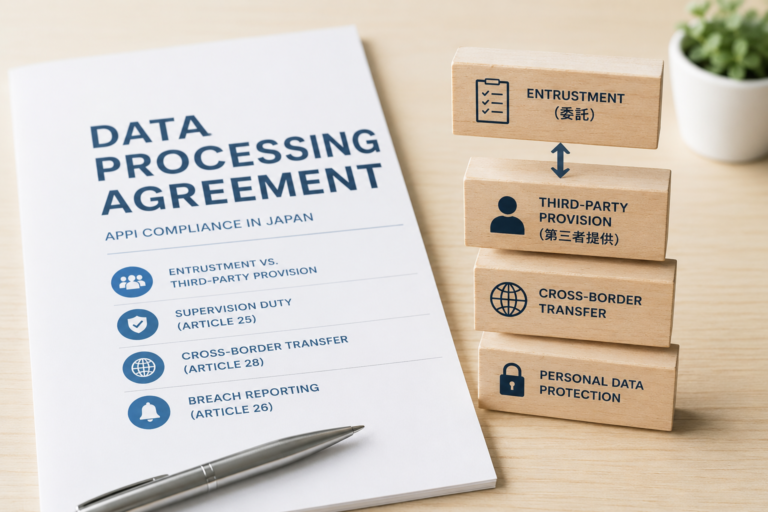
Reusing a GDPR DPA for a Japanese counterparty? Learn why APPI's entrustment and third-party-provision concepts differ from controller/processor, what supervision actually requires, and what to add for cross-border transfers and breach notification.
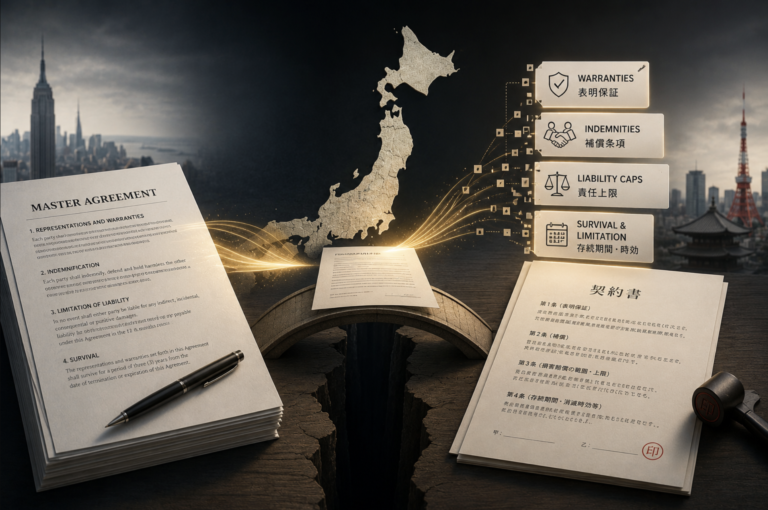
Using a US-style indemnity clause in a Japanese contract? Learn why "indemnify, defend, and hold harmless" may not work as intended, what causation and foreseeability requirements apply, and what to prioritize when adapting your template.

Found a Change of Control clause in a Japanese contract during M&A diligence? Learn how these clauses work under Japanese law, where foreign buyers get caught, and what to check before closing.

Does your Japan contract’s dispute clause actually work, or does it just look complete? Many foreign-drafted clauses name “mediation” with no mediating body, or skip the negotiation step Japanese counterparties expect. This article covers how to design an escalation clause that functions when you actually need it.

Acquiring a Japanese business or selling your Japan operations? The choice between a share deal and an asset deal looks different in Japan — employees don’t transfer automatically, licences can’t be assigned, and consumption tax hits at closing. This article breaks down the legal and practical differences so you can choose the right structure before you commit.